THE LOST SQUADRON
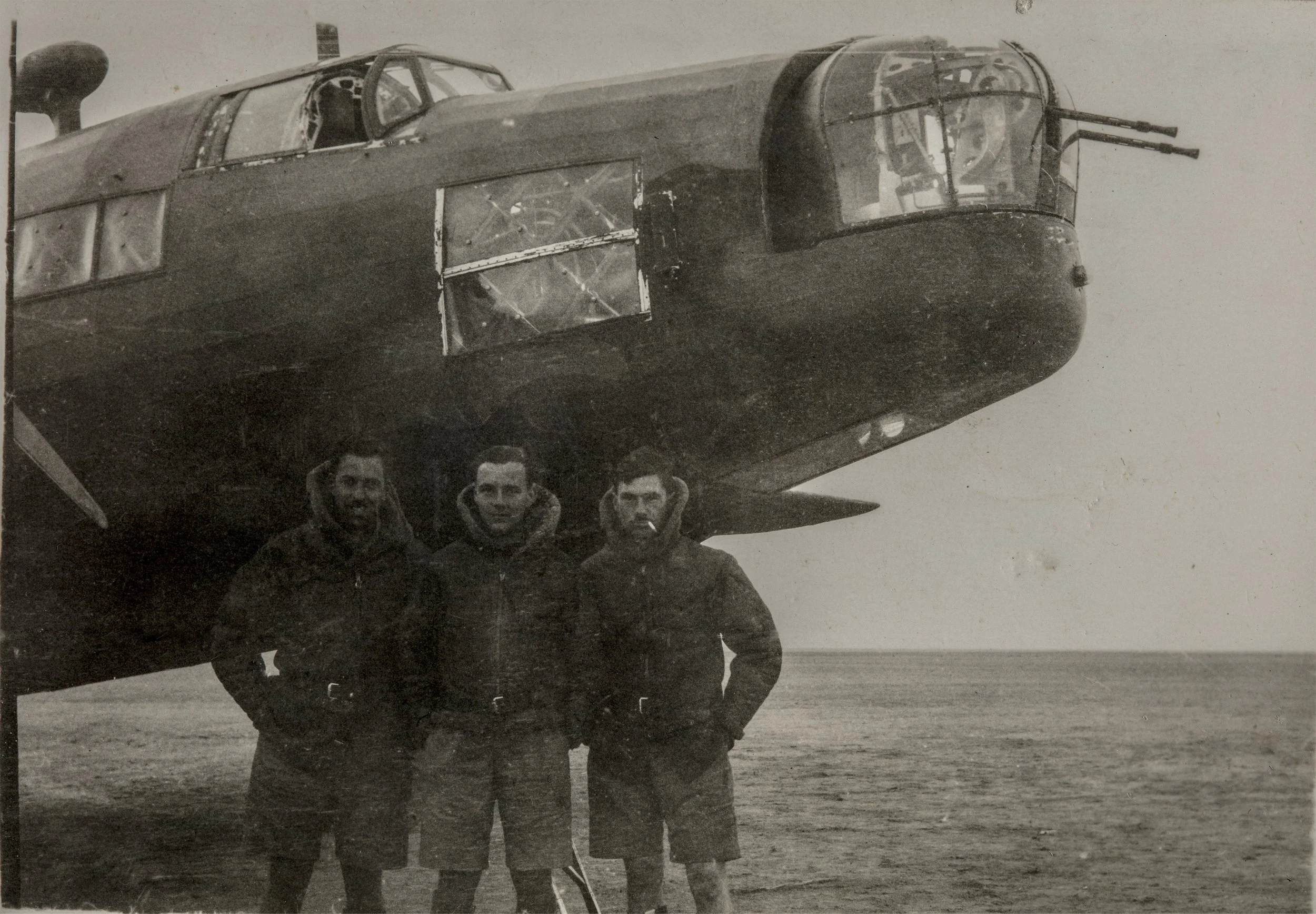
Flight Sergeant Jack Flockhart (left) with two fellow No. 38 Squadron aircrew beneath a Vickers Wellington at Landing Ground 60, Libyan Desert, 1941. Flockhart family archive.
THE ARCHIVE
Flight Sergeant Jack Flockhart was an RAF air gunner who served with No. 38 Squadron across North Africa and the Mediterranean before joining No. 149 Squadron in Britain. He was killed during an operation against Germany on 6 June 1942, five days after his twenty-eighth birthday. His daughter Jacqueline grew up without him.
In 2017, Jacqueline came to an unfinished exhibition of my research. She brought a carrier bag containing her father’s North African photographs—an extraordinary personal record preserved by the family. I photographed the collection at high resolution before returning the originals to her.
Following Jacqueline’s death in 2026, I returned to the project. The Lost Squadron brings together Jack’s photographs, forbidden letter, RAF service record, squadron operational books, wartime maps and the handmade wooden Wellington that survived within my side of the family.
This is an archive in progress and a tribute to them both.
Research material, family photographs, RAF records and wartime maps assembled during the original development of The Lost Squadron.
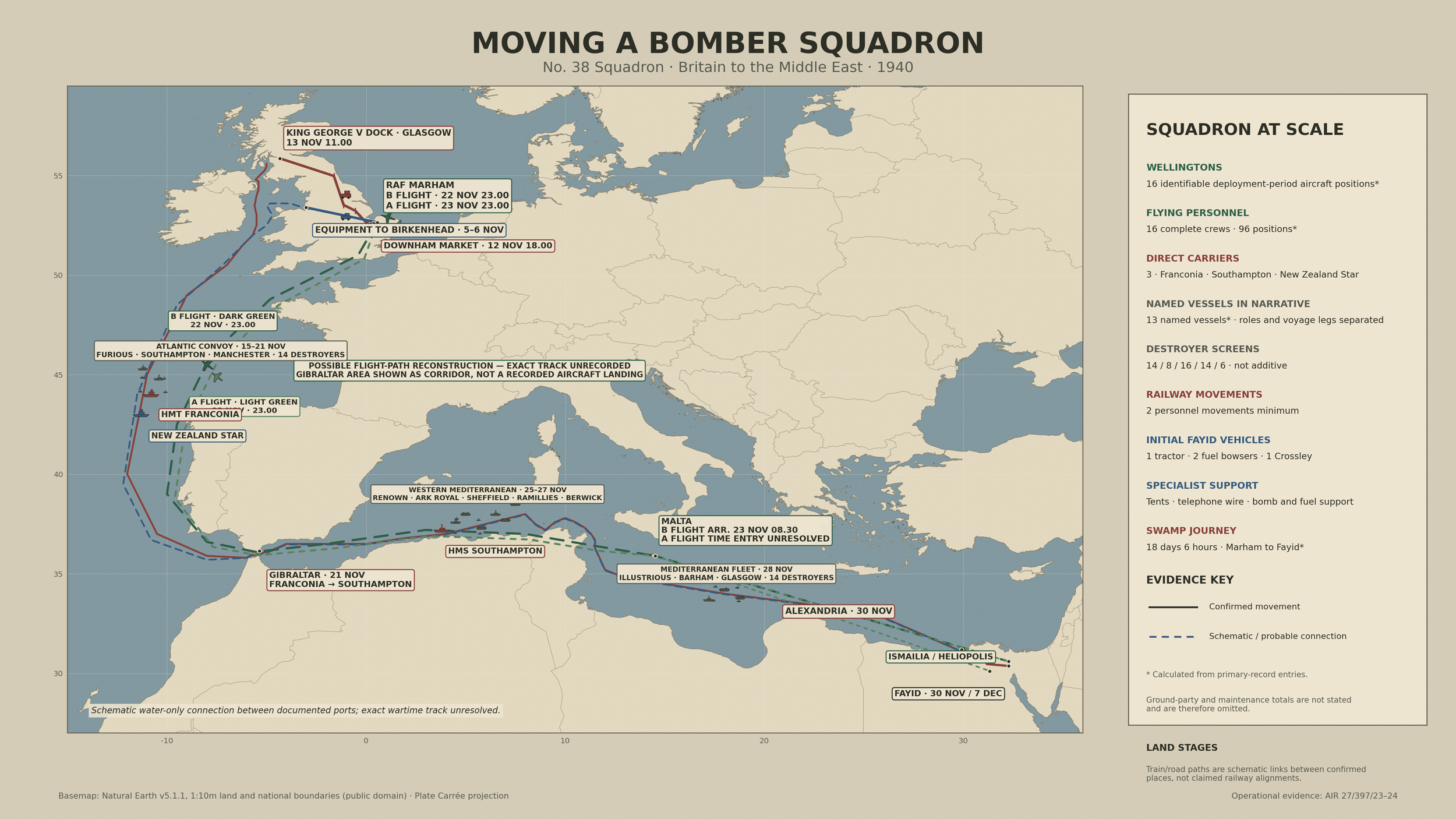
Moving a Bomber Squadron: No. 38 Squadron, Britain to the Middle East, 1940. Geo referenced reconstruction of its flying, ground and equipment routes—and naval protection—compiled by Mark Pearson from AIR 27/397/23–24.
THE CONVOY
Moving No. 38 Squadron to the Middle East meant dividing it into separate elements: Wellingtons and flying crews, ground personnel, vehicles, tools, spares and operational equipment.
The sea-going ground party—known as “Swamp”—travelled by special train to King George V Dock, Glasgow, and embarked aboard HMT Franconia on 13 November 1940. The squadron’s equipment travelled separately through Birkenhead aboard New Zealand Star. At Gibraltar, the men transferred to HMS Southampton for the passage into the Mediterranean.
Their movement formed part of a much larger protected operation. The surviving record names the carriers HMS Furious, HMS Ark Royal and HMS Illustrious; the capital ships HMS Renown, HMS Ramillies and HMS Barham; several cruisers and successive destroyer screens.
These warships were not assembled solely for No. 38 Squadron, but they reveal the machinery surrounding its journey. Moving one operational bomber squadron required railways, troopships, cargo vessels, naval transfers and protection extending from Britain to Egypt. More than eighteen days passed before its separated personnel and equipment could be reunited and prepared for desert operations.
Source: AIR 27/397/23–24.
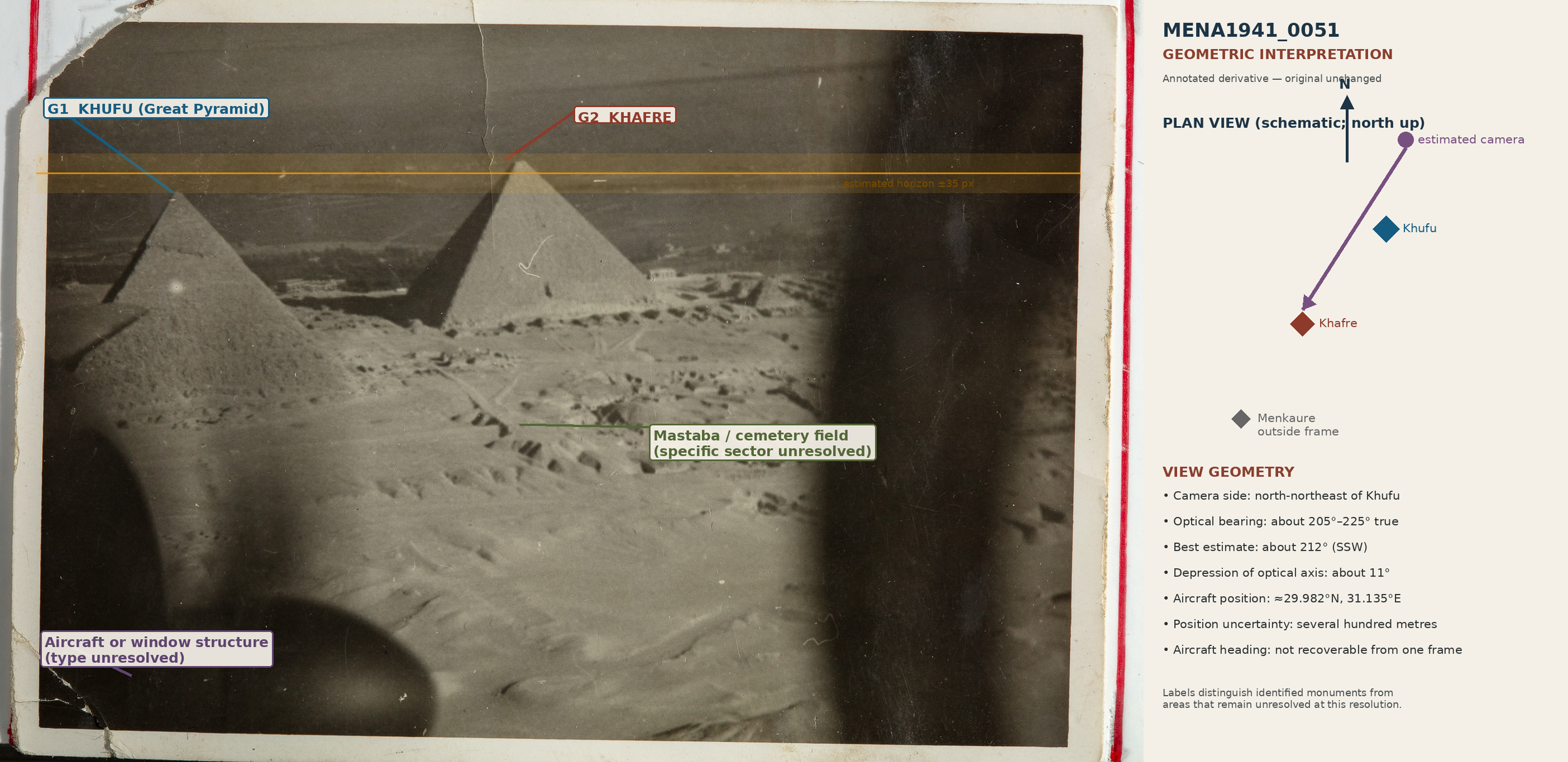
MENA1941_0051.jpg — The Great Pyramid of Khufu, foreground, and the Pyramid of Khafre photographed from Jack Flockhart’s Vickers Wellington bomber during his Middle East service, circa 1940–41. The aircraft was north-northeast of Giza, looking south-southwest, in probable morning light. Flockhart-Pearson family archive.
Interpretative reconstruction based on archival evidence.
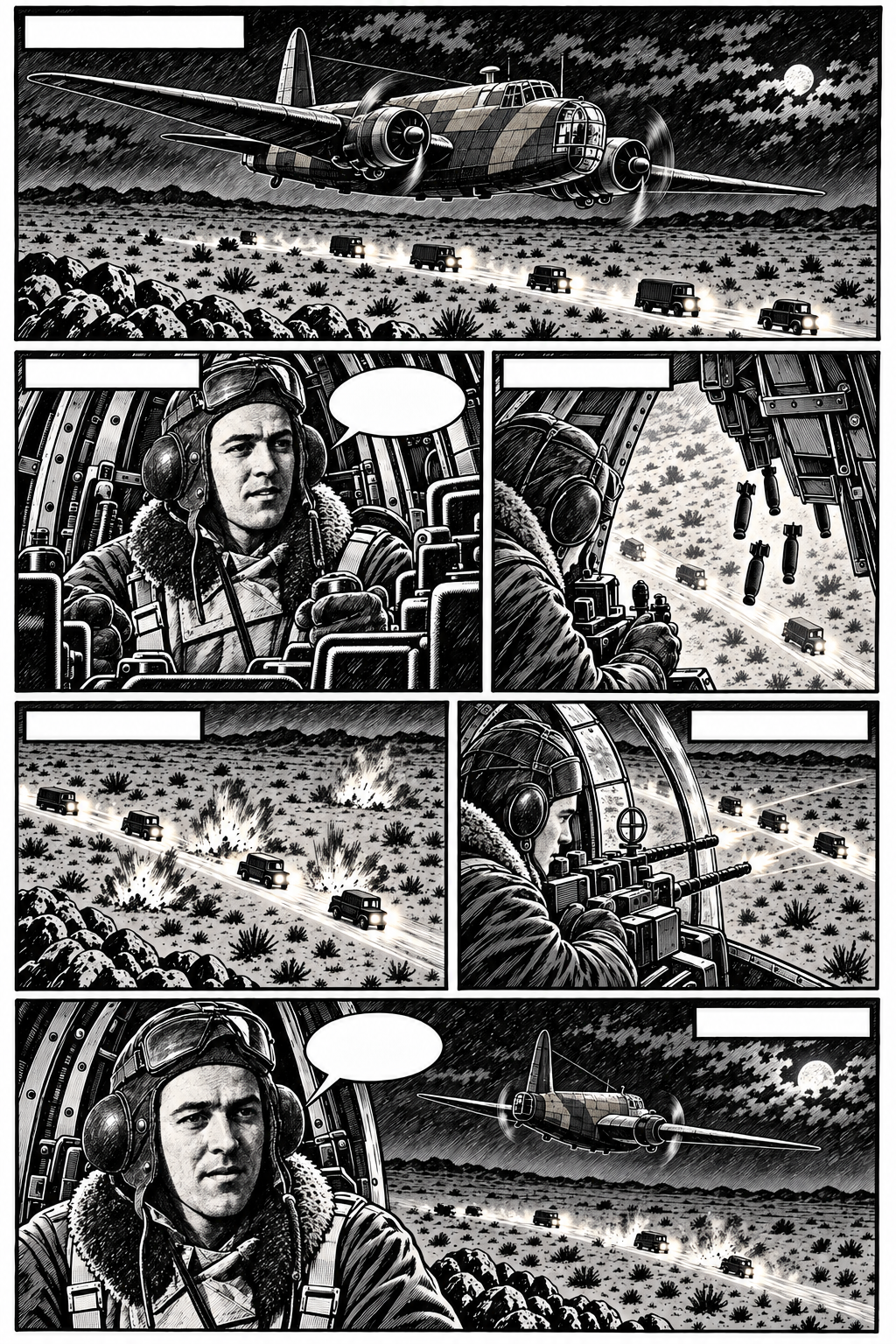
THE LOST SQUADRON
Panel 1 — Approach
1 April 1941 · Mersa Brega, Libya
No. 38 Squadron Wellington Ic bombers operated from Great Gambut against Tripoli and enemy transport. Sgt Middleton’s aircraft took off at 19.35.
Panel 2 — Jack at the guns
Sgt John Spiring “Jack” Flockhart · RAF air gunner
Jack’s letter said that he flew on this operation, the official entry identifies only “Sgt Middleton and crew.” This was Jacks aircrew. His participation is therefore CONFIRMED
Panel 3 — Bomb release
Sixteen 250‑lb bombs · Total load 4,000 lb
The Wellington released six bombs from 1,500 feet, four from 1,200 feet, and six from 800 feet.
Panel 4 — Mersa Brega road
The bombs were reported bursting among illuminated enemy motor transport. Vehicles not hit dispersed from the road into the surrounding desert.
Panel 5 — Machine-gunning pass
The Wellington then machine-gunned fast cars continuing along the road. The crew reported two put out of action. Jack later wrote that they descended to 300 feet to machine-gun the column; the Form 541 does not record the firing altitude.
Panel 6 — Withdrawal
Middleton’s Wellington landed at 01.55 on 2 April 1941. Jack later described it as “the last operation we did” before the squadron’s hurried withdrawal from Great Gambut.
Source line: AIR 27/398/8, Form 541, Appendix D43, pp.1–2; AIR 27/398/7, Form 540, p.1; Jack Flockhart’s letter, 16 April 1941.
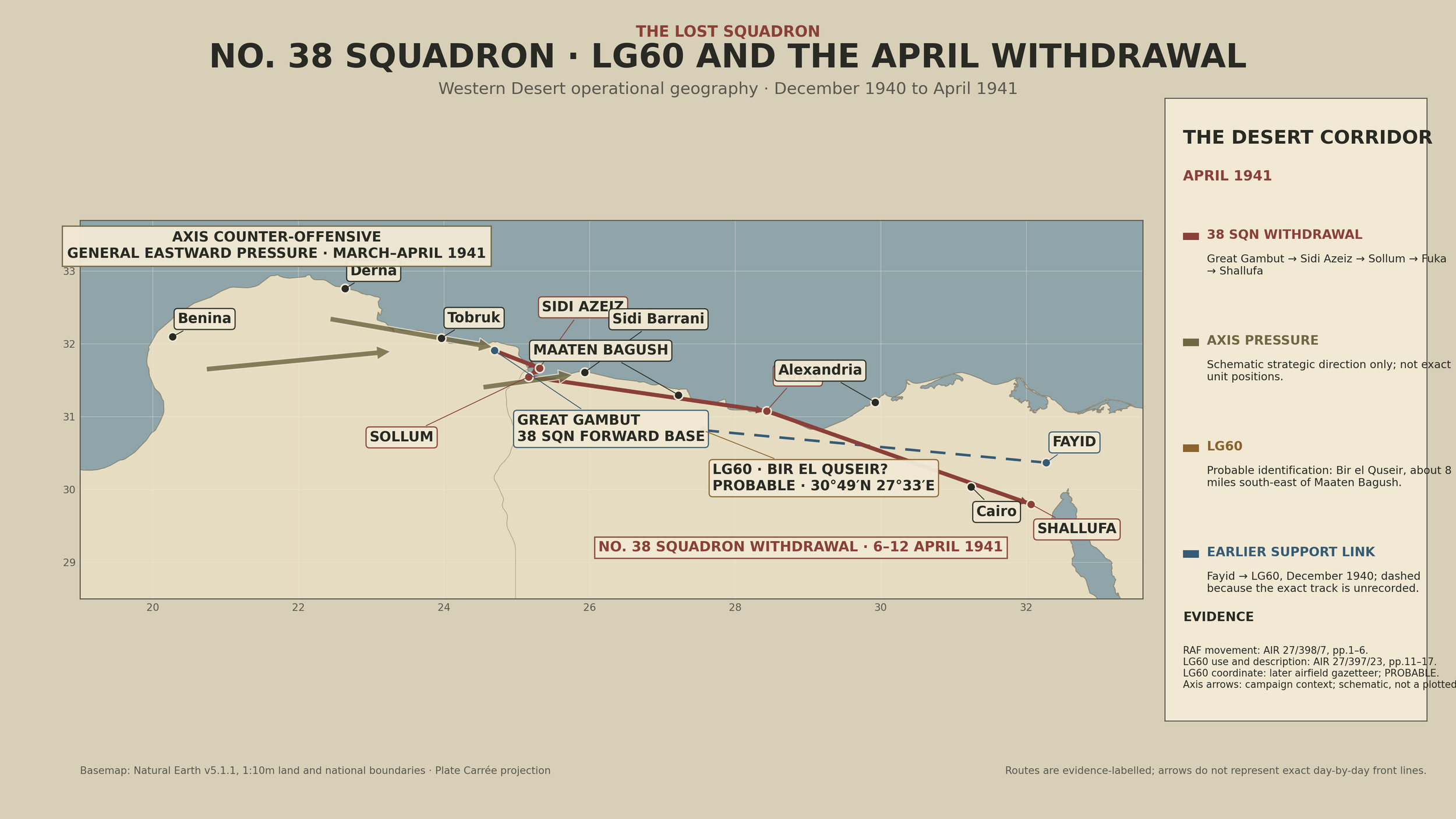
In the first week of April 1941, Jack’s war compressed into low-level attacks on enemy transport, long nights over Tripoli and Rhodes, an Axis advance across Cyrenaica, and the evacuation of Great Gambut through a sixty-mile-an-hour sandstorm—the episode he remembered as “the lost squadron.”